Beading the future: A Maa co-designed Nature Future visions.
Maasai Pastoral Aspirational Futures
The community-owned conservancies of Olkirimatian and Shompole, in Magadi, are located between Amboseli and Maasai Mara national parks. This region is not only home to some of the highest concentrations of wildlife in the world but also homes Maasai people of Southern Kenya. Maa people, who have been and contibues to custodians of the landscapes for millennia, are often othered from discourse on conservation, tourism and farming, the recently contested 2025 Ritz-Carlton Maasai Mara safari camp case. Additionally, Pastoral communities like the Maasai communities in the landscapes continue to face challenges pertaining to land-subdivision and increasing climate change related weather extremes. Combined with often top-down directed research paradigms, pastoral communities are often left vulnerable to system and reginal shocks. It is therefore important for transformations to sustainability research and discourse to include more African case studies.
Without centring local voices and cultural values within transformations to sustainability discourse, and imagining aspirational people-nature scenarios, we risk repeating the same dominant regimes of domination, epistemic and cognitive injustice. However, more inclusive and people-informed bottom-up narratives for desirable people-nature futures are important tools in exploring multiple nature perspectives, pathways for transformations and necessary collaborators in achieving desirable and aspirational people-nature-livestock futures.
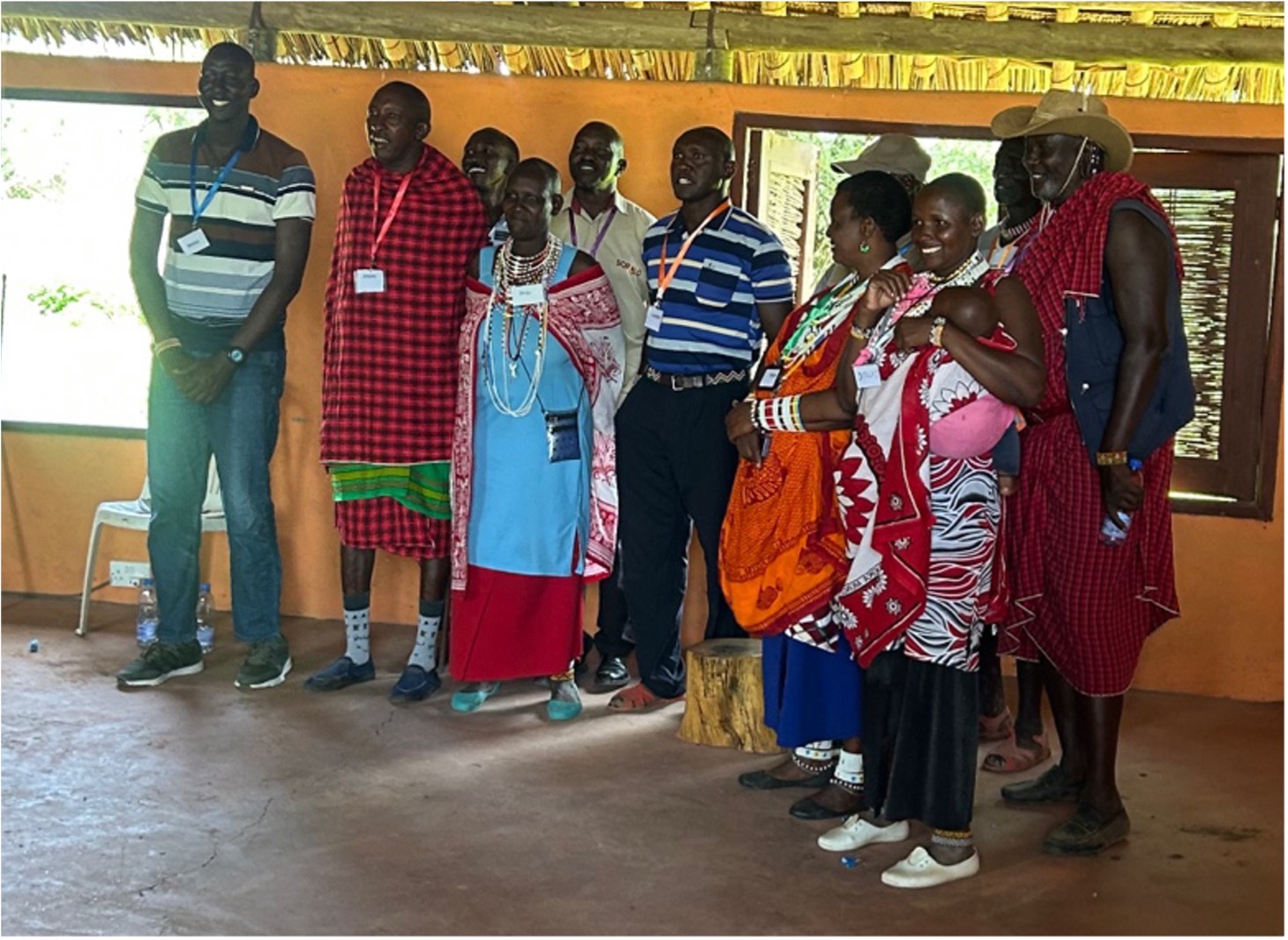
Workshop stakeholders occupying the Nature as Culture in NFF exercise.
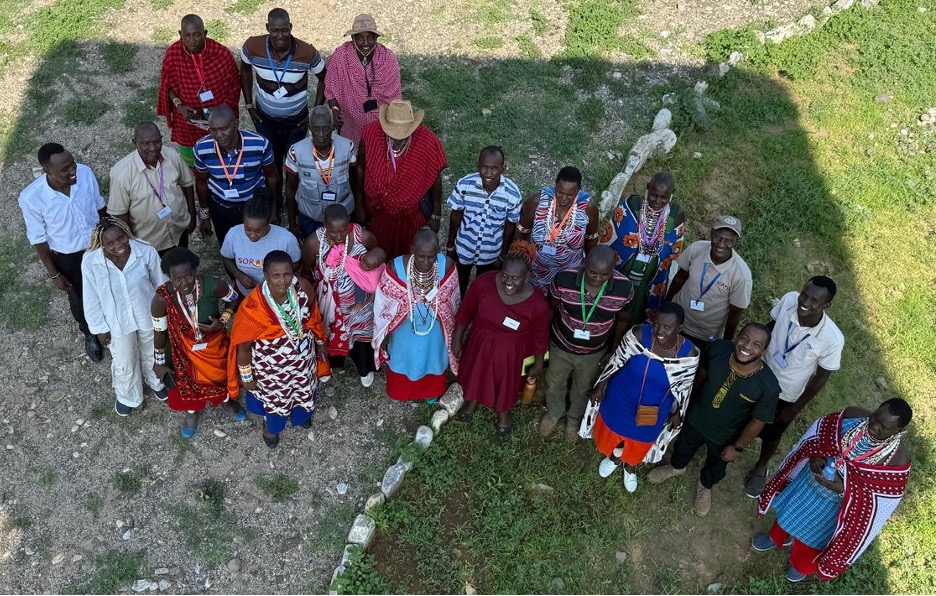
Between the 17th-19th March 2026, OPALs and FEFA funded PhD students, Therezah (Terry) Achieng from university of Exeter, and Batlhalifi Nkgothoe from University of the Witwatersrand, ran a workshop at Lale’enok Resource Center, in Kajiado West Sub-county in Southern Kenya. The aim of the workshop was to explore aspirational and desirable Maasai community future visions for pastoralism and conservation. The workshop explored themes such as communal living, varying configurations of living with livestock, wildlife and people. This engagement was preceded by fieldwork done by the abovementioned researchers in Shompole, Olkirimatian, Kimana and Olgulului group ranches in Kajiado county. The workshop, facilitators and stakeholders explored community interactions with land, livestock, wildlife and people.
Stakeholder centred methods and tools
The workshop brought together 21 stakeholders to collectively imagine and co-envision desirable nature-people-livestock futures in the landscapes of Shompole and Olkirimatian. Stakeholders included pastoralists, rangers/community rangeland ambassadors, elders, livestock market coordinators, widows, herders, crop farmers and beadmakers. The workshop was facilitated with the help of local Maa speaking community researchers. Like many African oral cultures, Maa cultural community is shaped by relational social-ecological principles that link and bring people and land together. Engagement of stakeholders during the workshop adhered to Maa cultural behaviours, for instance, seating in circles which symbolises a neutral ground where all stakeholders in the circle have the right to speak and be heard.
Using data from previous fieldwork, along with numerous feedback group sessions and consultations, we integrated Eramatare and the Nature Futures Framework (NFF). The NFF is a heurist tool employed to explore people’s valuation of nature based on three set value perspectives. Eramatare, on the other hand, is a Maa relational inhabitation that enables co-existence with the living world and was centred as the workshop’s theory of change. The workshop made use of Maa language, Maasai speaking facilitators, local and regional Stakeholders and multi-modal creative tools such as consented voice recordings, beadworks and a collaboration with a regional radio station for dissemination. In designing the workshop and its objectives, the oral cosmology of the landscapes was centred. Stakeholders co-envisioned three aspirational future scenarios and nine pathways necessary in realising future scenarios using Future Wheels and the Three Horizons Framework.
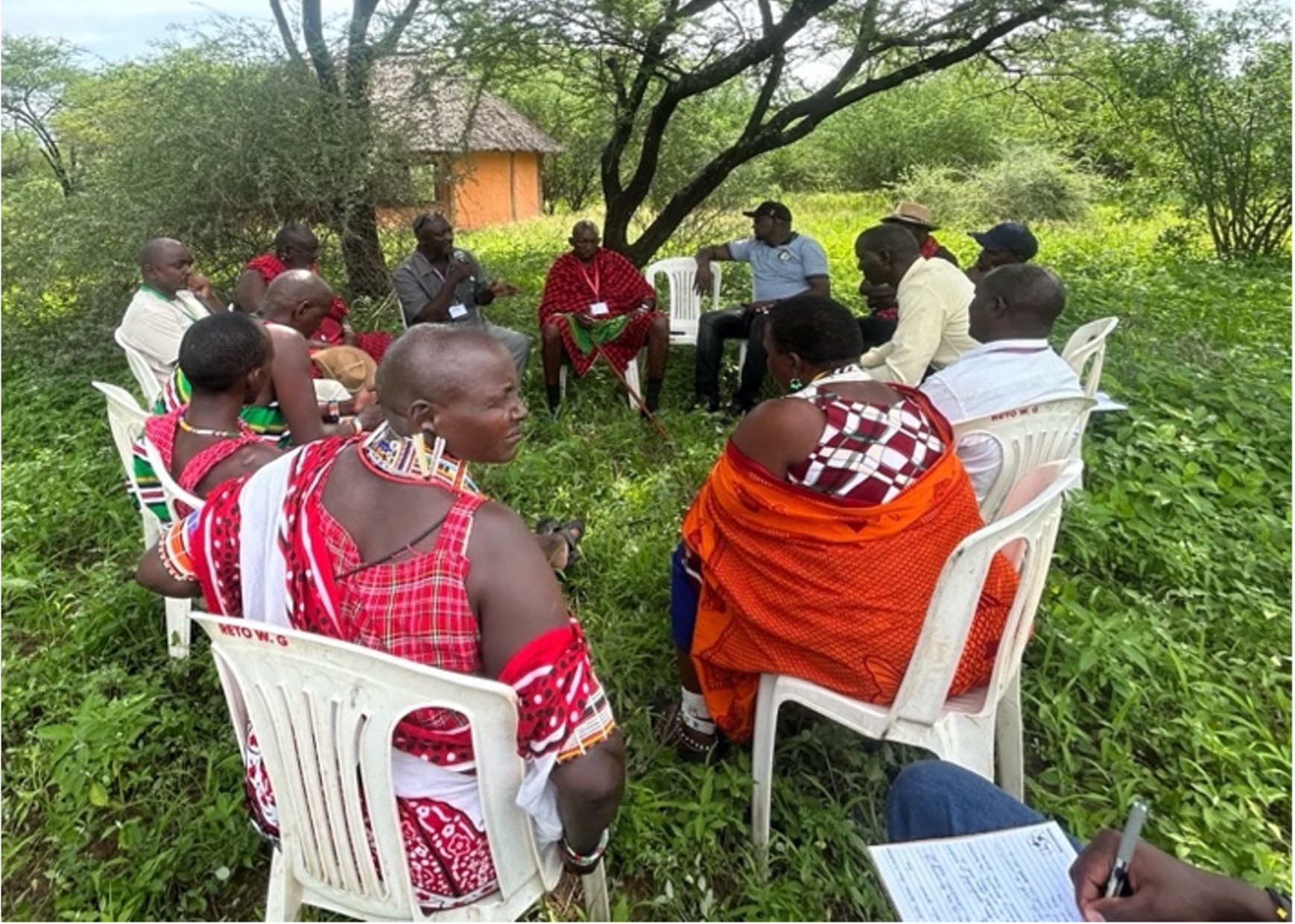
Stakeholders from Amboseli, Olkirimatian and Shompole in a Podcast with Mayan FM under an Accasia tree
Key reflections
Preservation of nature in the Maa community goes hand in hand with people’s culture, defined broadly as a way of living with the environment, hereafter articulated and related as land. Land is the backbone that connotes a shared living space that homes people, wildlife, livestock. Looking after these three primary elements needs care that not only nurtures but also gives back. This is deeply embedded in Maa cultural day to day ways of doing and living with and on their land. Cultural principles underpinning this caring are espoused in Eramatare.
- All future visioned scenarios were centred around Maa culture, nature stewardship and prosperous livestock systems.
- In some scenarios, the use of technology led to decreased human-wildlife conflict. A phenomena on the rise as a result of increasing extreme weather events.
- Some scenarios saw the deployment of elders into schools as reserve and indigenous knowledge experts, to complement the current curriculum for cultural and biodiversity preservation.
What next?
Currently, desired future scenarios and their narratives are currently in development through a consultative process with Stakeholders and radio station collaborators. All findings, reports and publications from the workshop are to be published in consultation with stakeholders.
Collaborators: South Rift Association of Land Owners, Green-STEM, Mayan FM, SASSCAL-TIPPEC 2.0 and the National Research Foundation RSA