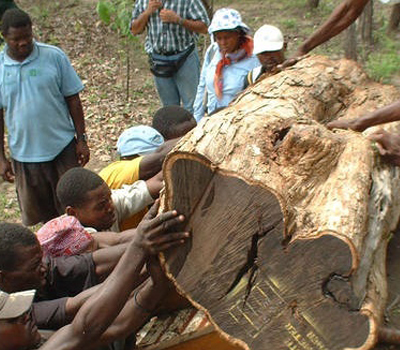
Illuminating sustainable use of woodlands
Woodfuel and timber extraction are major activities across southern African woodlands, and FEFA researchers Tatenda Gotore and Fezile Mtsetfwa are helping to assess sustainable levels of use, through novel datasets and identifying referencing ecological
Tatenda published a paper in Biotropica showing that Teak timber production in Zimbabwe can be enabled through allowing community fuelwood harvesting on gazetted land: the main timber species, Baikiaea plurijuga, grows faster when the woodlands are maintained in a more open structure with lower tree-on-tree competition. This helps inform forestry policy in Zimbabwe and provides avenues for local people to benefit.
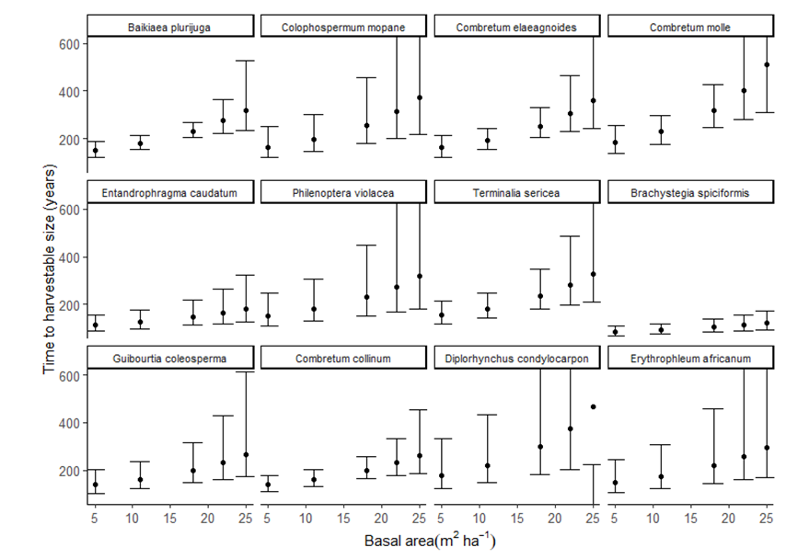
Figure Gotore et al 2026: When plot basal area is kept low then key timber species like Baikiaea plurijuga reach a harvestable size class faster – thus community fuelwood harvesting can enable timber production in Zimbabwean woodlands
Fezile compared human woodfuel harvesting to other disturbance agents in Africa, such as elephants, cyclones, and fire. Her paper in Bioscience showed that there are large regions in Africa where human impacts might be compensating for the loss of elephants – i.e. enabling ecosystem function rather than degrading it.
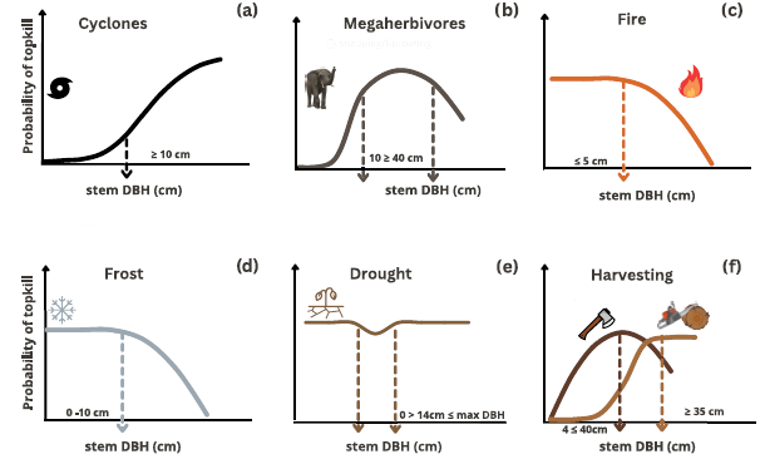
Figure Mtsetfwa et al 2026: Comparing disturbances in African savannas and woodlands in terms of the size of trees impacted. Elephants and people select similar sized trees.