
African forest-grassland mosaics are exciting and special
By Sally Archibald, Professor, University of the Witwatersrand, Co-PI Future Ecosystems for Africa Program
I have recently been on a month-long field trip in Kibale National Park in Uganda. It is famous for having the highest primate diversity on the continent. As exciting, for plant ecologists, is that the park spans a forest savanna transition: the almost continuous forest in the north gives way to open patches of savanna on the hills, and these two vastly different, but adjacent ecosystems jostle against each other, in a mosaic, until the system transitions into the open savannas of Queen Elizabeth National Park.
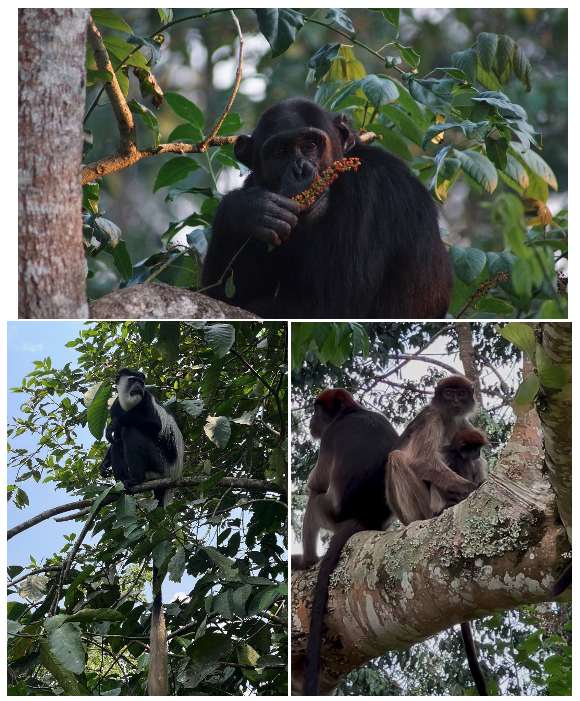
Figure 1: Kibale National Park, Chimpanzees, Black and White Colobus, Red Colobus, and 10 other primate species make it their home. Photo credit Laura Ryge Koch
These forest-grassland, and grassland-forest mosaics are a characteristic of African ecosystems. The relative proportions and landscape positions can vary depending on topographic and biophysical conditions, but even the tropical forest deep in the Congo has permanent open grassy habitat, and forest patches and closed thickets are important components of grasslands and savannas.
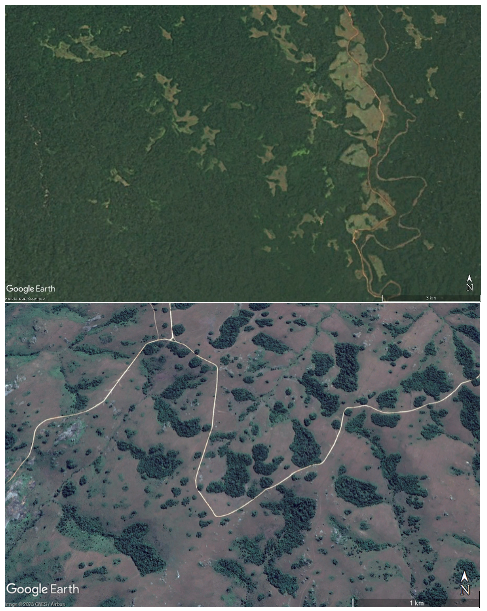
Figure 2: A forest grassland mosaic (mostly forest with savanna patches) in Lope National Park, Gabon, and a grassland-forest mosaic (mostly grassland with forest patches) in Nyika Plateau, Malawi. These mosaic ecosystems are characteristic of the tropics, and the ecological processes where forests meet grasslands are key to understanding tropical vegetation function and biogeography.

Figure 3: Planting tree seedlings during a reforestation project in Kibale National Park https://facethefuture.com/projects/uganda-kibale-reforestation#0
This forest reserve is a hive of reforestation activity at present, with funding from international agencies to achieve the aligned conservation and carbon goals of increasing the area under forest. The managers on the ground are aware of the complexity of trying to implement these carbon projects in a transition ecosystem, but the funding and international support is all for afforestation, the faster the better, with very hands-on active restoration being the preferred mechanism to achieve this.

Figure 4: Repeat photography of Ngogo Hill: a previously grassland habitat surrounded by forest in Northern Kibale. In the photograph on the left, taken in 1976, the forest-grassland mosaic is clearly visible, but by 2007, in the photograph on the right, the grassy savanna has been invaded by encroaching woody shrubs – it is not converting to forest but it is no longer a savanna, and the grassy-specialist species have been lost. Photo credit: David Tumusiime
While the Ugandan Wildlife Authority has a clear mandate to manage and conserve the savanna component of the park, and do engage in some savanna management actions, in reality there is little enthusiasm for conservation efforts in these grassy savannas. The consequence, unfortunately, is that the savanna ecosystems are being rapidly smothered by invading shrubs, with, my forester colleagues gleefully tell me, some new forest seedlings starting to germinate underneath. They believe it is just a matter of time before forest clothes all the hills around us.
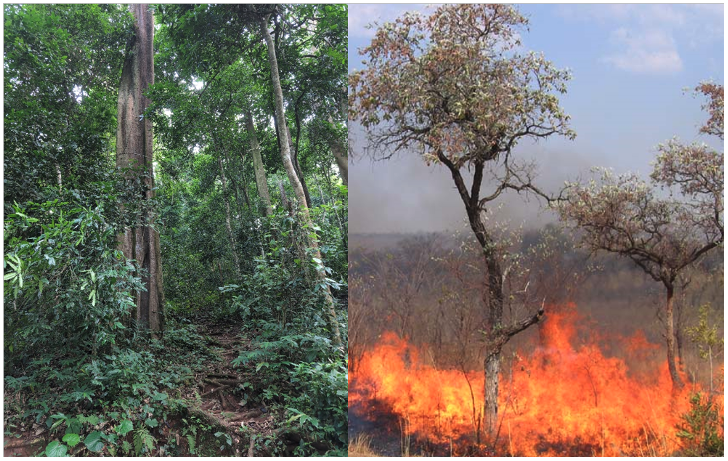
Figure 5: Forests and savannas coexist in mosaics because plants in each ecosystem engineer environments that are not hospitable to the other: Forests have shady, cool environments where grass can not survive, and fire can not spread. The high-light environment in grasslands and savannas produces a flammable surface fuel load. Each ecosystem has unique biodiversity that has evolved over millions of years together.
When asked about their conservation goals for the grasslands, the managers remind me that Kibale is a forest reserve, and one of the few remaining chimp habitats, so it makes sense to manage for forest here, and let the savanna disappear. They indicate that savanna vegetation can be protected in other ecosystems and parks, but Kibale’s mandate should be forest protection and restoration. This makes me incredibly sad: true, there are many wonderful savanna parks all around us, but Kibale has the distinction of being at the nexus of these two fascinating ecosystems: for many millions of years, complex ecological processes and interactions have acted to create two unique landscapes, and this struggle between light-smothering trees and fire breathing grasses is still going on today. We can’t wonder at this ecological phenomenon when the two ecosystems are never found together, and our ecosystems will be less resilient if we do not allow for the full spectrum of possible biodiversity to be retained in as many different parks as possible.
I wonder to myself how people would feel if managers of grassland-forest mosaics in Africa showed the same disregard for the small patches of afro-montane forests that co-exist with grasslands across the subcontinent. Instead, managers in these reserves apply considerable efforts and insight to protect and value both ecosystems, and where forests are threatened by run-away fires due to degradation/climate change they are actively protected and nurtured as important components of the biodiversity. I would like to ask the managers of forest-grassland mosaics across Africa and the world to show the same consideration to the grassland and savanna habitat that is in their care.
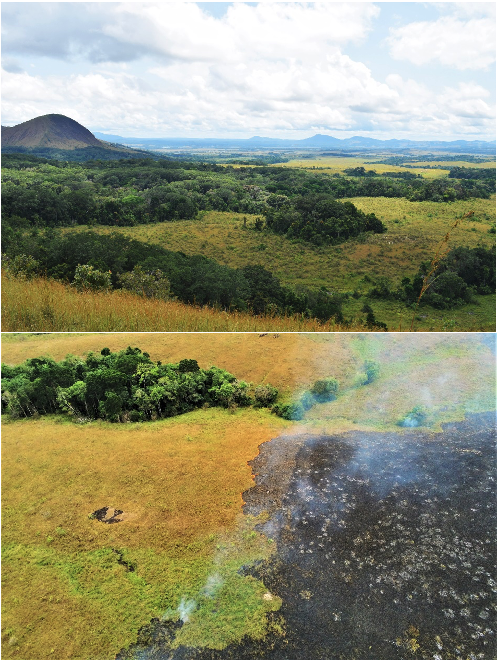
Figure 5: In other forest-grassland mosaics in Africa the savannas and forests are both valued and conserved. Managers at Lope National Park, in Gabon, implement prescribed fires to maintain the unique savanna patches, while concurrently conserving the surrounding tropical forest landscapes. The fires that are so essential to the savanna do not burn the forests, because the forest itself prevents the ingress of fire through shading out flammable under-story vegetation and creating moist microhabitats. Photo credit: Anabelle Cardoso